
Spray foam insulation
Foam costs more than loose fill but seals air while it insulates, so I usually point you to it when the ductwork runs through the attic.
South Whittier Insulation and Spray Foam insulates attics, walls and crawl spaces in Downey, CA, sealing the gaps first and clearing out worn or dirty insulation so your rooms hold their temperature.
Downey is mostly single-family houses with a big share of apartments and condos mixed in, going by city housing records that date back to 1997. Our calls here look the same, with homeowners whose house runs hot or drafty and property managers with multi-unit buildings. The city puts most of Downey in one energy code climate zone and the area north of Vista Del Rio in another, and since those zones shape what the building rules ask for, I check which side your house is on. We're based in South Whittier and do the same work next door in Norwalk and Pico Rivera, and out as far as Fullerton.
Price comes down to how big the attic is and how hard it is to reach, how many inches are already up there, whether old material has to come out, and whether you go with loose fill or foam. Removal or a roof repair that has to happen first moves the schedule more than anything, and the estimate I write on site gives you your own figure. On the low single-story houses we see a lot of here, working into tight eaves and around old ducts is usually what takes the time.
We close the gaps around can lights, pipes and the attic hatch first, because new insulation laid over a draft just fights it and the room below stays uncomfortable.
If what's up there is soaked or full of droppings, I'll tell you it needs to come out or get tested first, since fresh insulation on top only hides the problem.
We keep the edges as deep as the middle and leave the eave vents, the openings along the roof's edge, clear so the attic keeps breathing and the framing stays dry.
Foam costs more than loose fill but seals air while it insulates, so I usually point you to it when the ductwork runs through the attic.
Most Downey calls start in the attic, so we measure how much is already up there, seal the gaps, then add insulation where the rooms below need it.
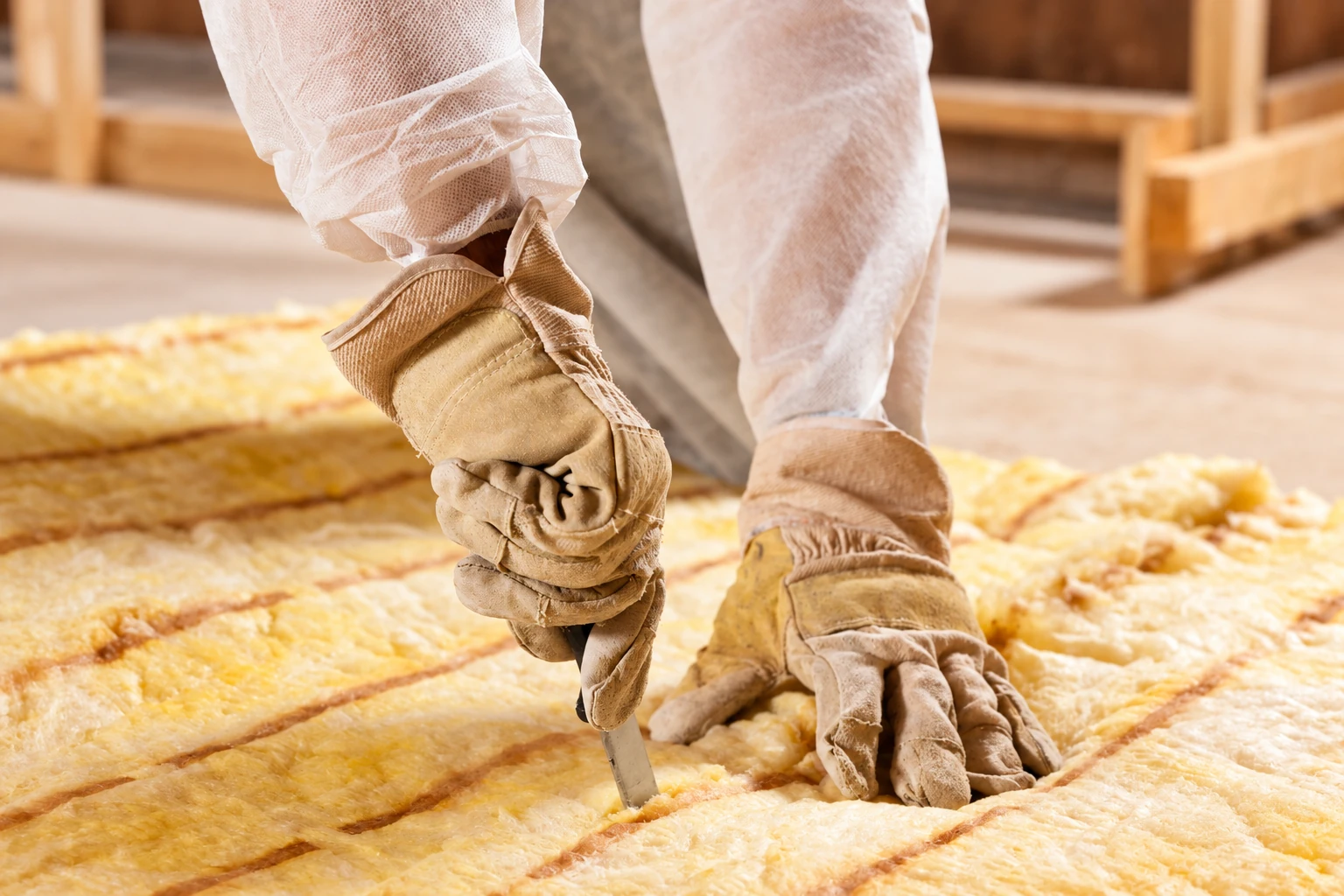
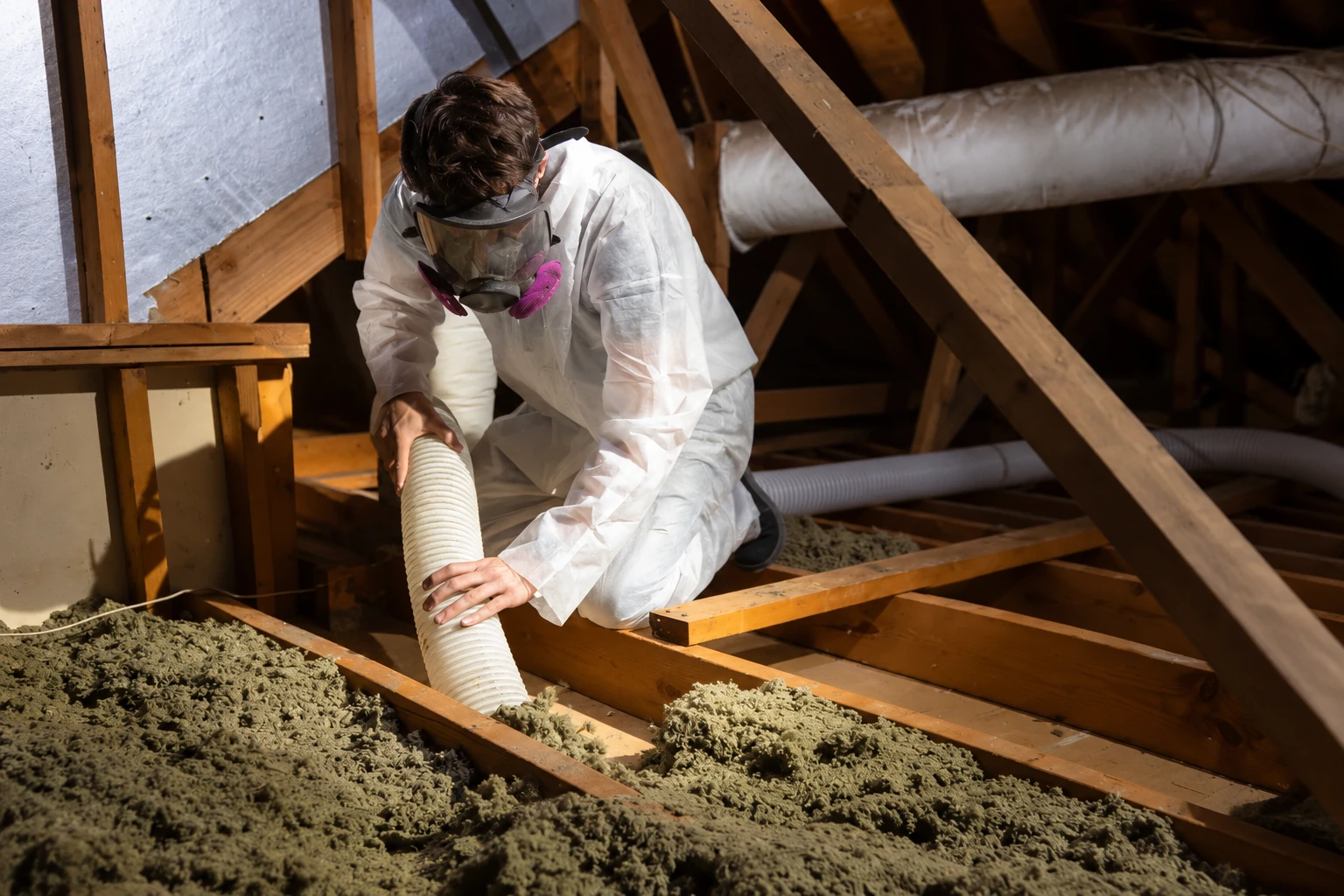
Blown-in insulation is loose fill sent through a hose, and it reaches the tight corners of low attics where rolls and batts won't fit.
When the house is drafty in more than one spot, like the room over the garage and cold floors, I walk it all at the estimate and tell you what to do first.
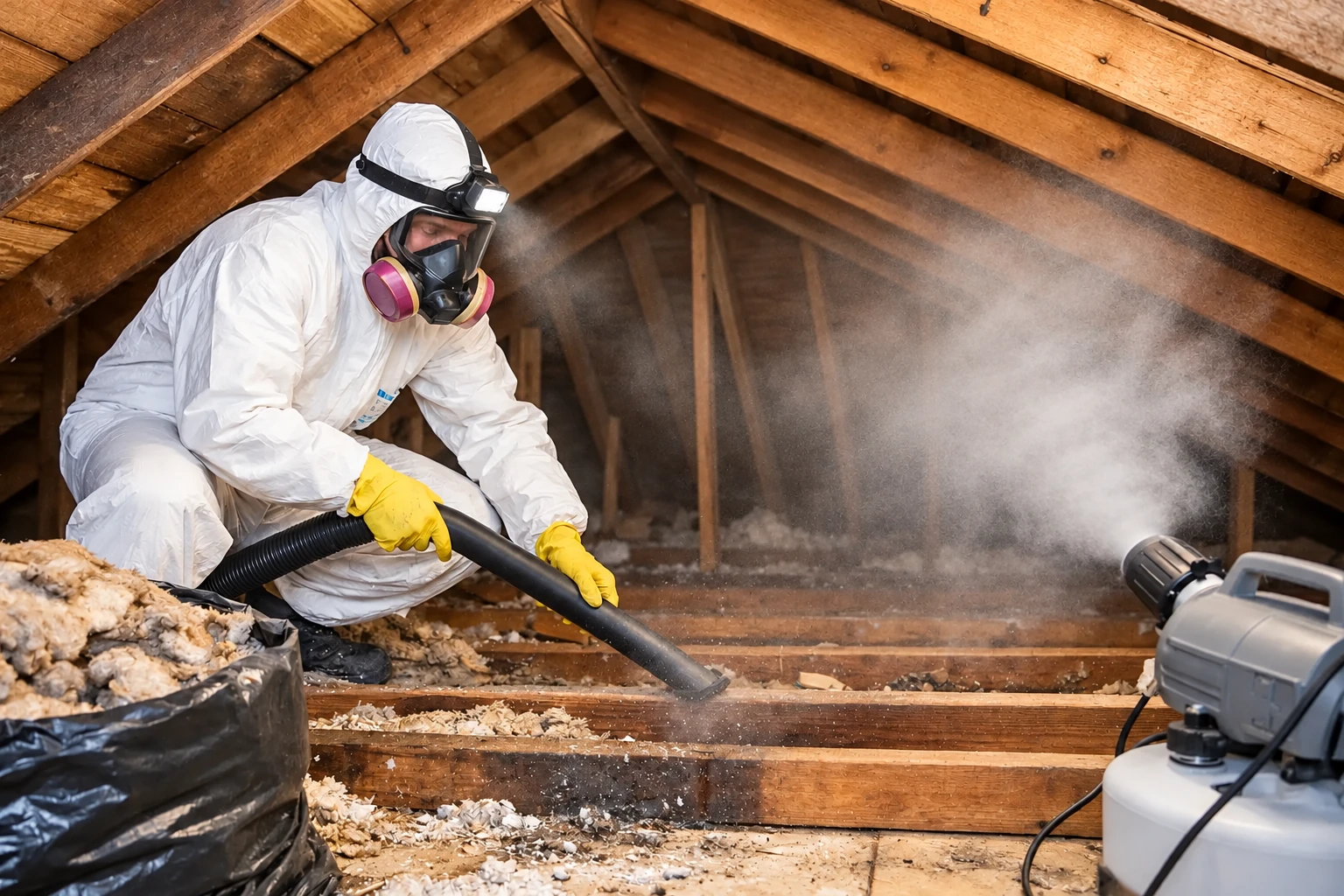
When old insulation is soaked, flattened or full of droppings, we vacuum it out and clean up before anything new goes in, so the problem leaves with it.
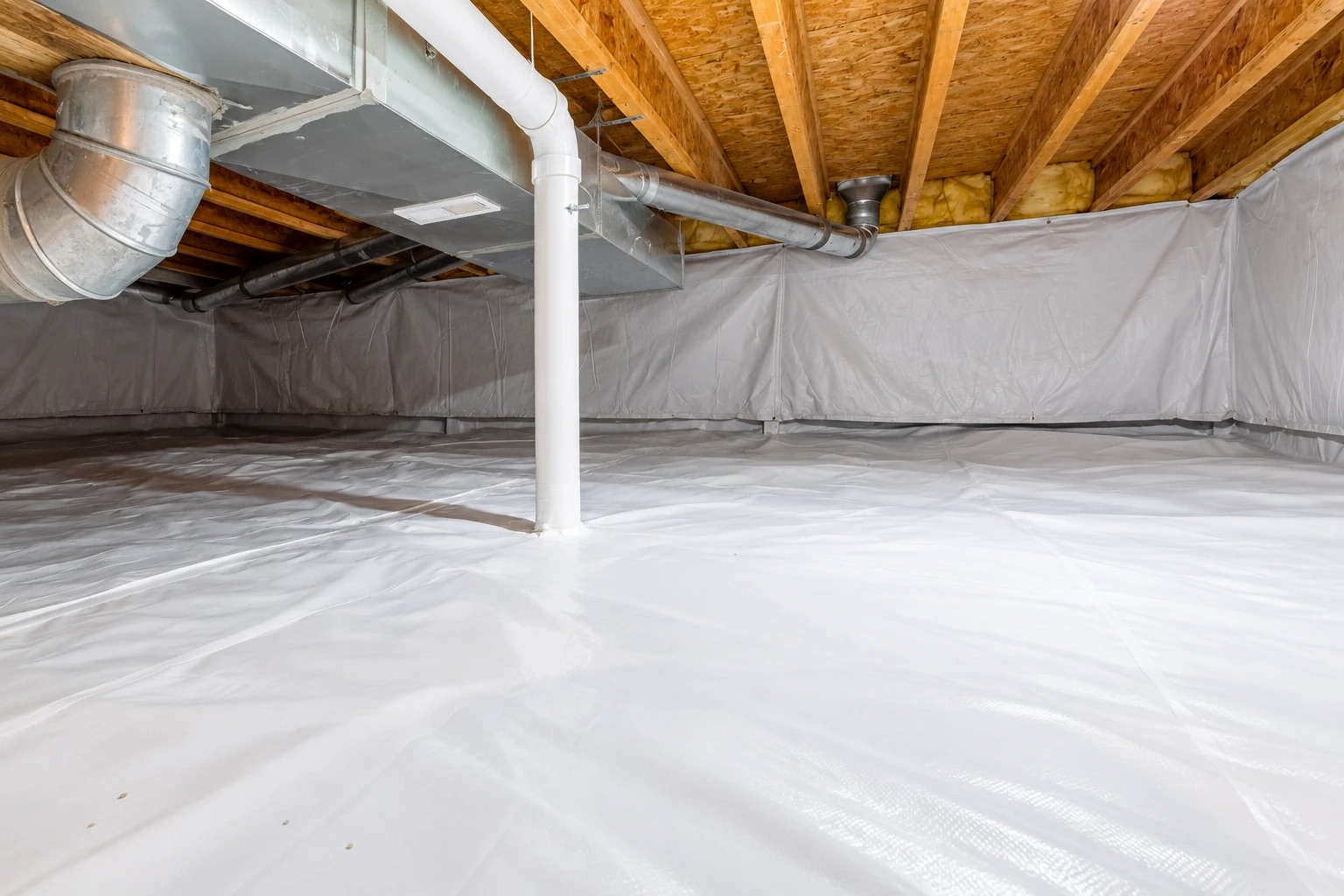
Cold floors in winter often trace back to a bare crawl space, so we insulate under the floor and keep the work clear of pipes and vents.
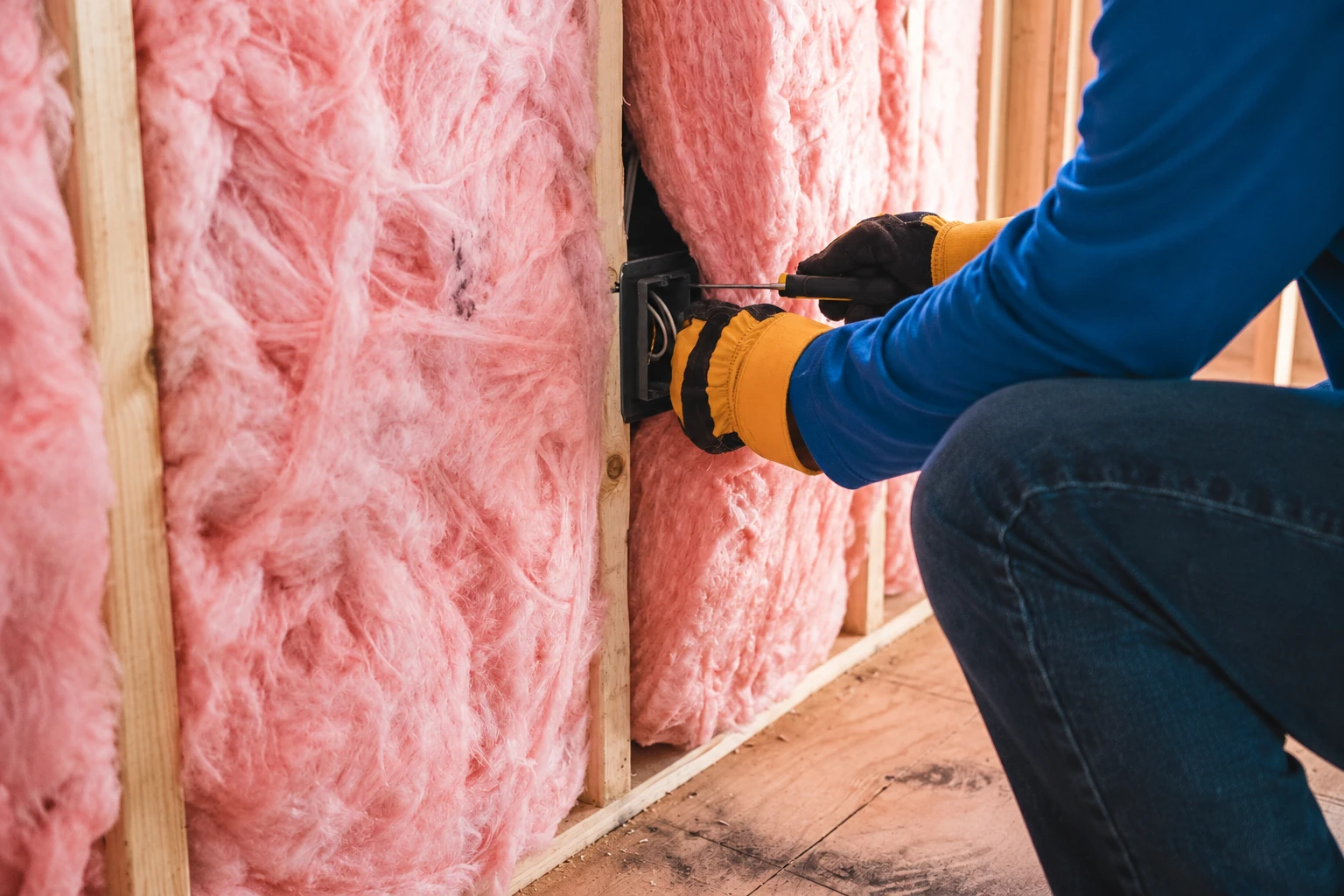
Exterior walls in older houses are often empty, and we fill them through small holes that get patched, so no wall has to come down for the job.
Air sealing means closing the gaps around pipes, wires and fixtures before insulating, and it's often the fix that helps a drafty room most for the money.
Basements are rare around here, but where a house has one, we insulate the walls and the band of framing on top so the space stays drier and more even.
Closed-cell foam is dense and blocks moisture, so it suits crawl spaces and other spots where damp air is part of the problem.
Open-cell foam is softer and expands to fill odd shapes, which makes it a good fit for rooflines and walls where moisture isn't the worry.
We insulate small shops, offices and multi-unit buildings for owners and property managers, and we plan the work around tenants and business hours.
A vapor barrier is a heavy plastic sheet laid over the dirt under the house, and it keeps ground moisture from soaking into the insulation and framing.
We put vapor barriers in walls, attics and floors where a house needs one, on the correct side so moisture doesn't get trapped inside the wall.
Before new insulation goes in, we seal the hatch, can lights and pipe holes in the attic floor, because that's where hot attic air leaks into your rooms.
Retrofit work brings an older house up to date without opening finished rooms, and we plan it around how you're living in the house during the job.
Send the form or call, and we'll get back to you within one business day to set a time. I come out, look at the job and write the estimate myself, free and with no obligation.
I opened this business in 2013 after years on an insulation crew, and I still come out to see the job so the price is based on what's really up there.
The estimate spells out what we'll remove, seal and add, so you know exactly what you're paying for before our crew carries anything up the ladder.
Our crew lead runs the work from start to cleanup, and I check in along the way, so the person who looked at your attic stays involved.
These are the permit, license and planning questions Downey homeowners ask before we start on an attic, wall or crawl space.
Downey's permit list doesn't name insulation, so ask the Building and Safety Division before work starts. The city's wording is that generally any new construction, alteration or repair to an existing building needs a permit, and permits are issued at the Building counter in City Hall. We check what your address needs, and if a permit is required, we handle the paperwork and line up the inspections.
Yes, if you live in the single-family house the permit covers, the city can issue it to you as an owner-builder. Permits for townhomes, condos, apartments, duplexes and commercial buildings go only to licensed contractors. Either way, a permit lapses if work doesn't start within 12 months of issue or stops for 180 days, so have the job lined up before you pull it.
Yes, the city requires a business license for any business working in Downey, including contractors whose offices are outside the city. A contractor pulling a permit there needs a current one, and it can be paid for when the permit is issued. It's a fair thing to ask any contractor you're comparing, us included.
Yes, get the leak fixed first, because new insulation over a wet spot just hides it until the ceiling stains. In Downey a re-roof needs a permit, while repairing 100 square feet or less of roof covering on the same building within 12 months is on the city's exempt list. If I see water damage at the estimate, I'll tell you before we price anything.
We're based in South Whittier and take jobs in these cities and others around it. If you don't see your city here, call (562) 358-3003 and ask.
Call (562) 358-3003 or send the form with the room that bothers you, so I know what to look for when I come out.