
Spray foam insulation
Foam seals air and insulates in one step, and it costs more. We'll tell you plainly when it's worth it and when sealing and loose fill do the job for less.
South Whittier Insulation and Spray Foam is an insulation contractor working in Whittier, CA. We seal attic gaps, clear out worn insulation and add new blown-in or spray foam insulation so drafty, hot upstairs rooms stay comfortable.
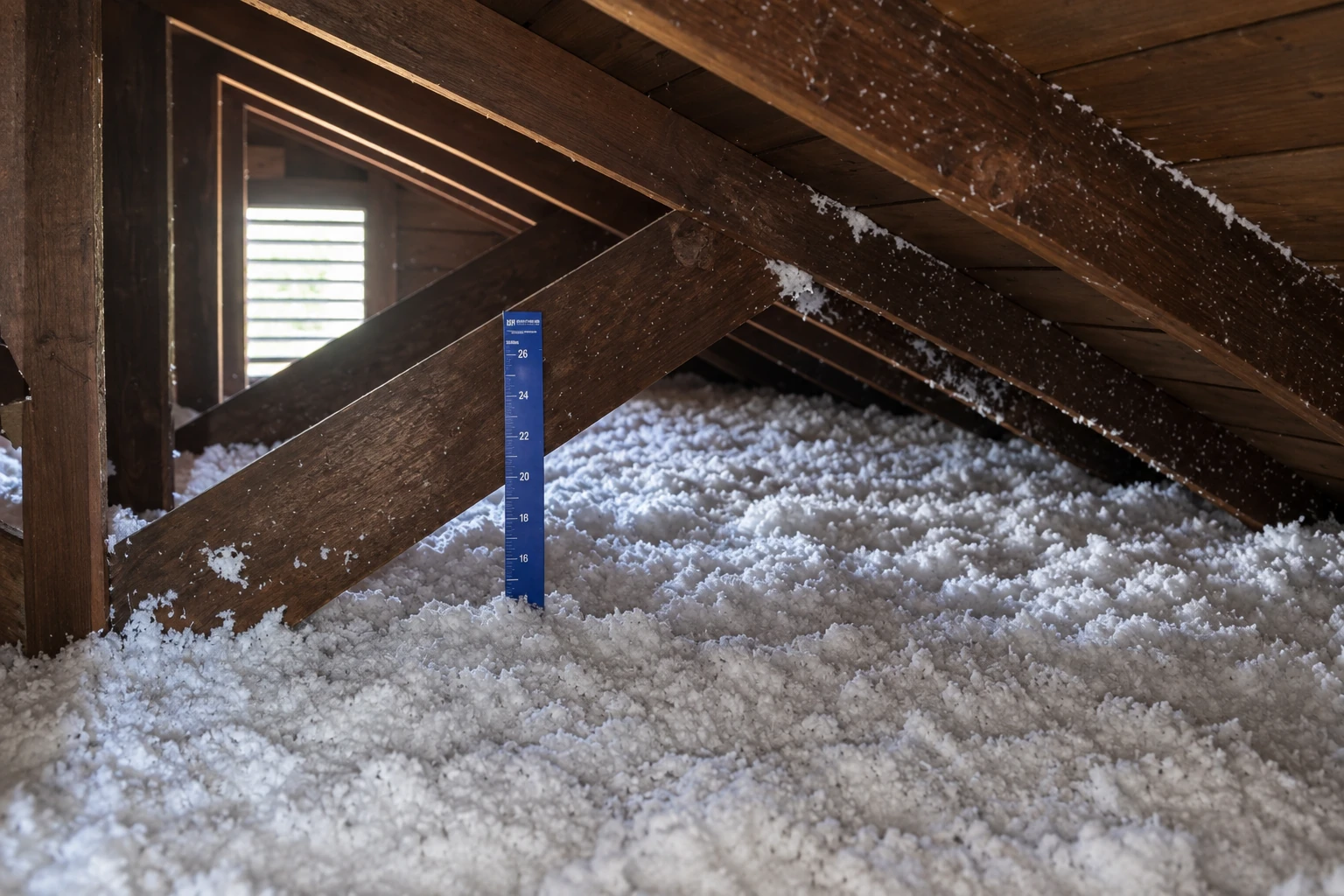
Whittier is right next door to us. We're an insulation contractor based in South Whittier, CA, and the calls we get from Whittier sound a lot alike. One is an upstairs that won't cool down in summer. Another is a room over the garage that's cold all winter. A third is attic insulation that's gone flat and gray. What you'll pay turns on a few things: how many inches are up there now, whether the old layer is clean or soaked or full of droppings and has to come out, how many gaps need sealing, and whether ductwork in the attic makes foam worth the extra cost. Removal and any permit move the schedule most. I come out, look at all of it and write the estimate myself, so you see the number before anything starts.
Before we start, we check which building office covers your address. Inside city limits that's the City of Whittier. South Whittier-Sunshine Acres and West Whittier-Los Nietos are unincorporated county communities, though, and LA County Public Works issues permits there. We do the same work next door in Pico Rivera. Older houses around here usually need sealing and a cleanup before they need more insulation, so that's the order we work in.
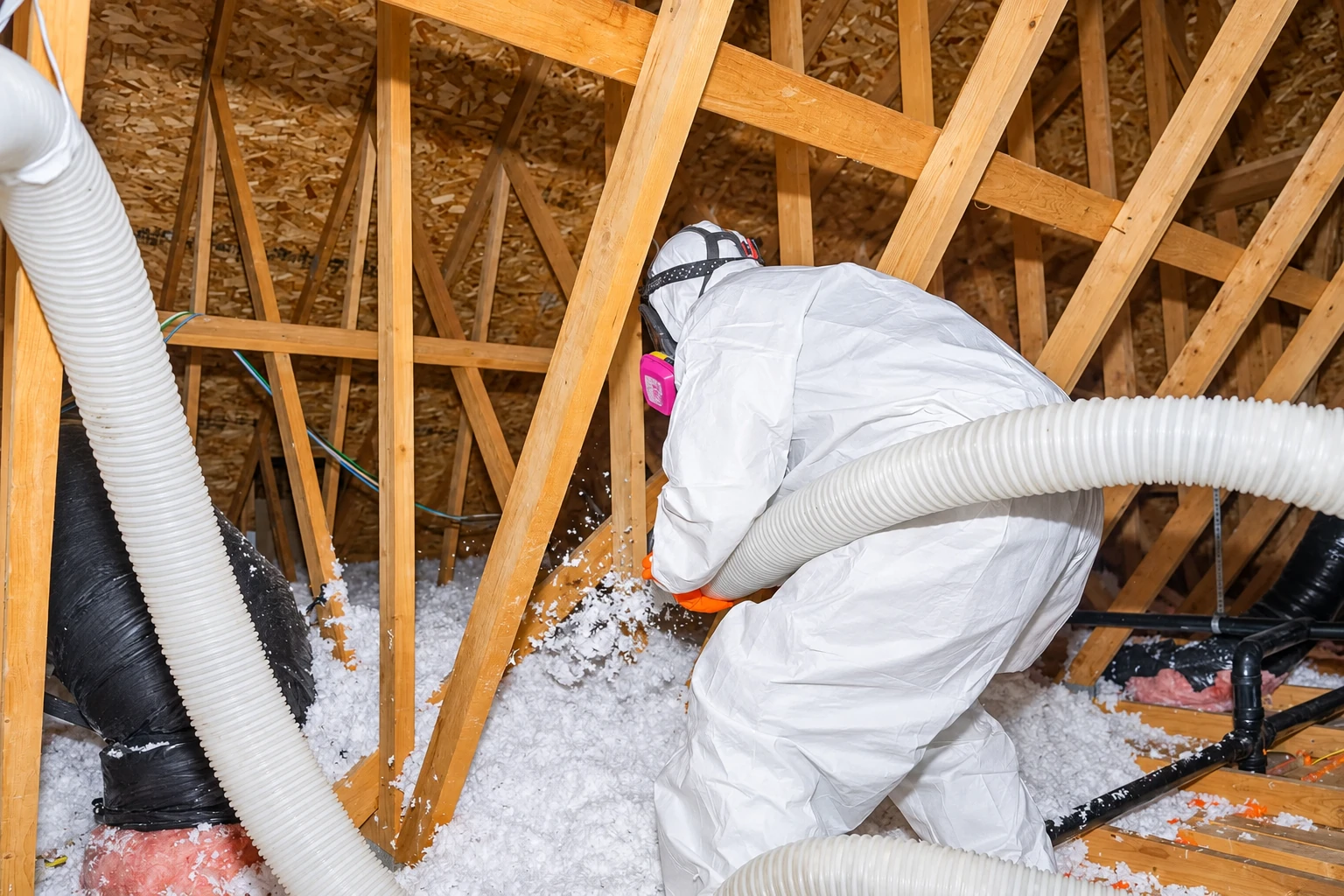
We do the air sealing first, closing gaps around can lights, pipes and the attic hatch, because new insulation laid over a draft just lets the air keep moving through it.
If the old layer is soaked or full of droppings, or the roof leaks, I'll tell you to deal with that first, because new material on top just hides the problem.
We keep the eave vents, the openings along the roof's edge, clear and bring full coverage out to the edges, so the attic still breathes and moisture doesn't build up in the framing.
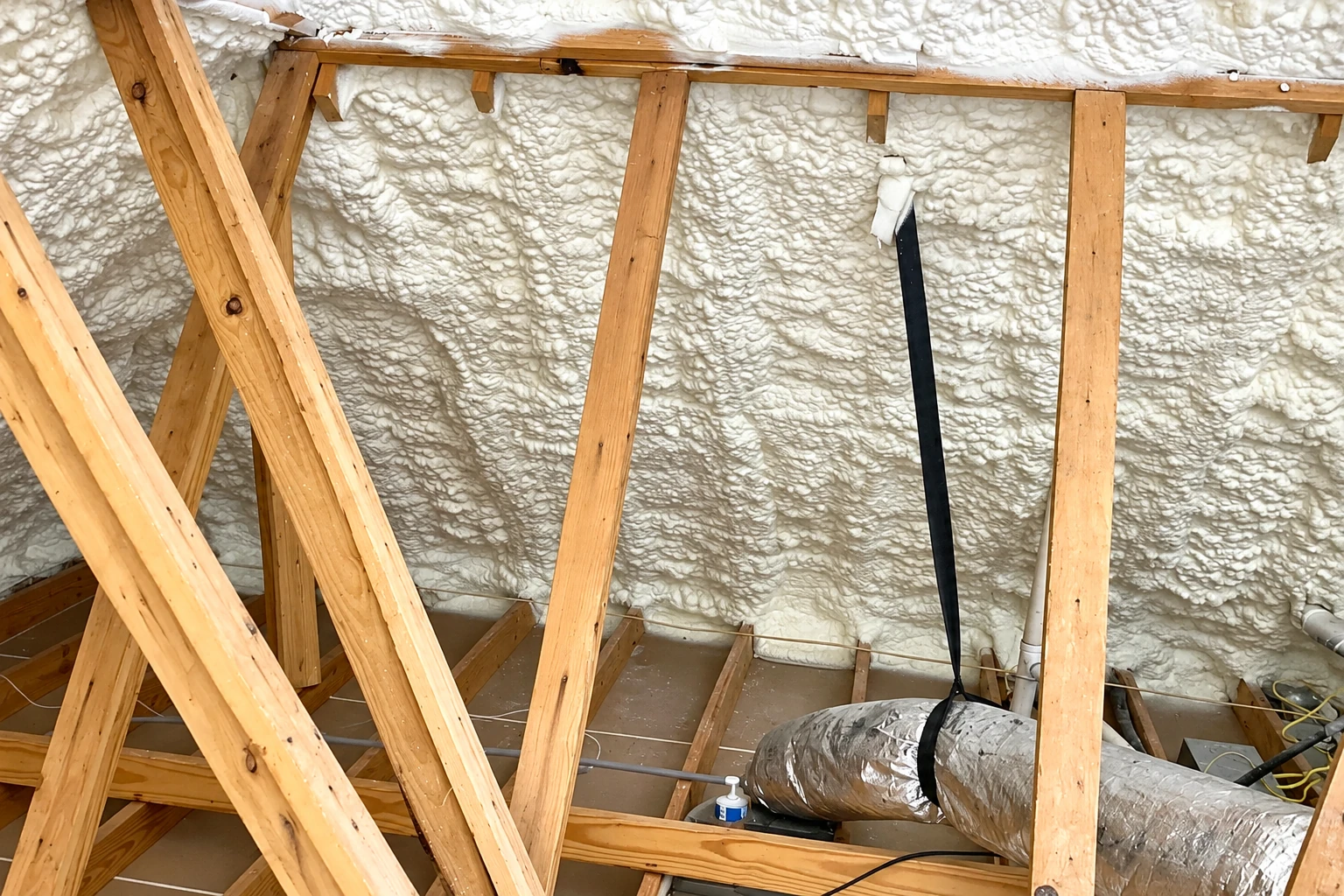
Foam seals air and insulates in one step, and it costs more. We'll tell you plainly when it's worth it and when sealing and loose fill do the job for less.
Most Whittier calls start in the attic. We measure what's up there, seal the gaps, clear the eave vents, then bring coverage up evenly from the middle out to the edges.
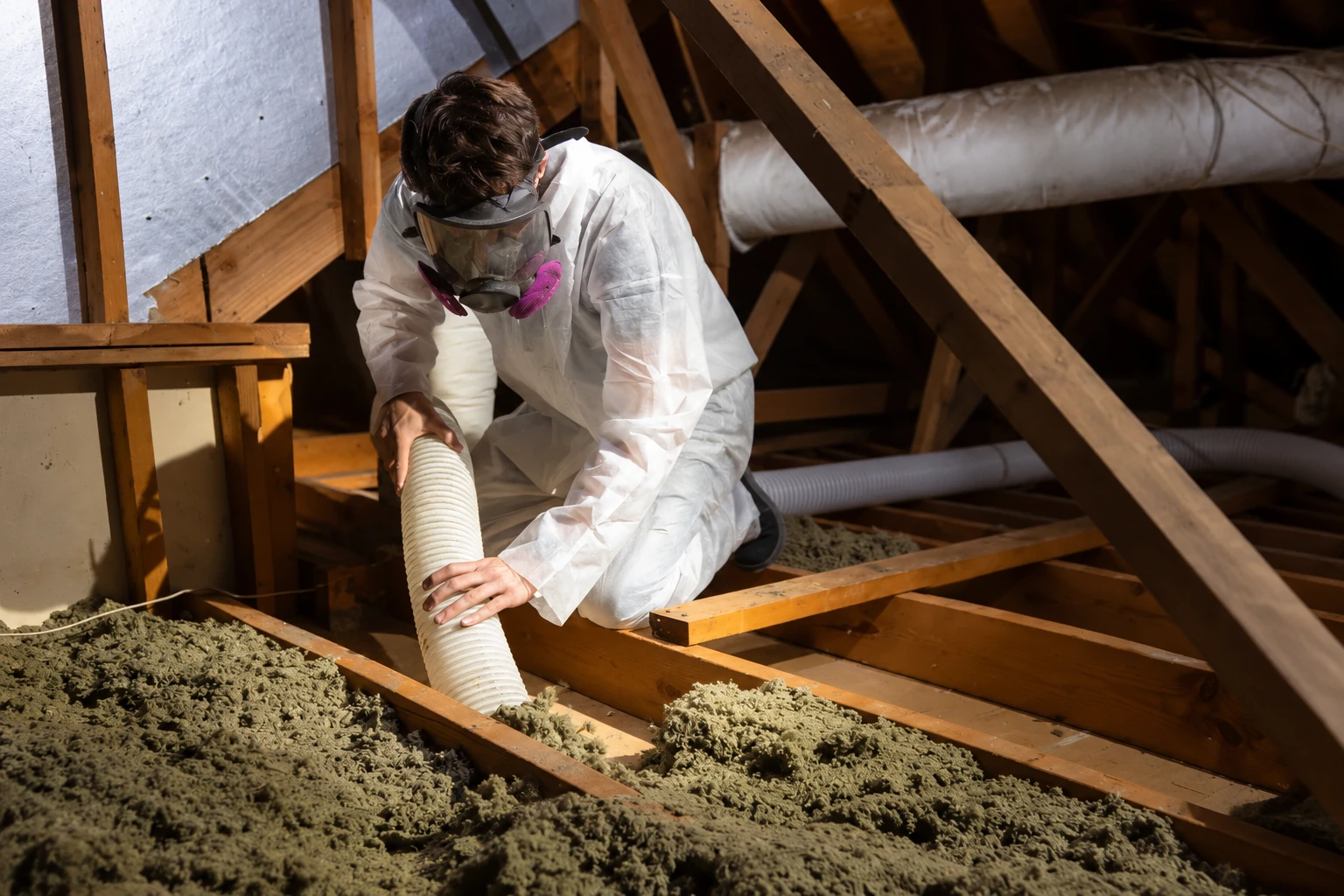
Loose fill blown through a hose is our usual answer for an attic floor with thin or settled insulation, because it fills in around joists and wiring without leaving gaps.
When several rooms run hot or cold, we look at the whole house, from attic to walls to floors, and tell you which part to fix first and which can wait.
We vacuum out insulation that's soaked, flattened or full of droppings, bag it and haul it away, so nothing new goes down on top of an old problem.
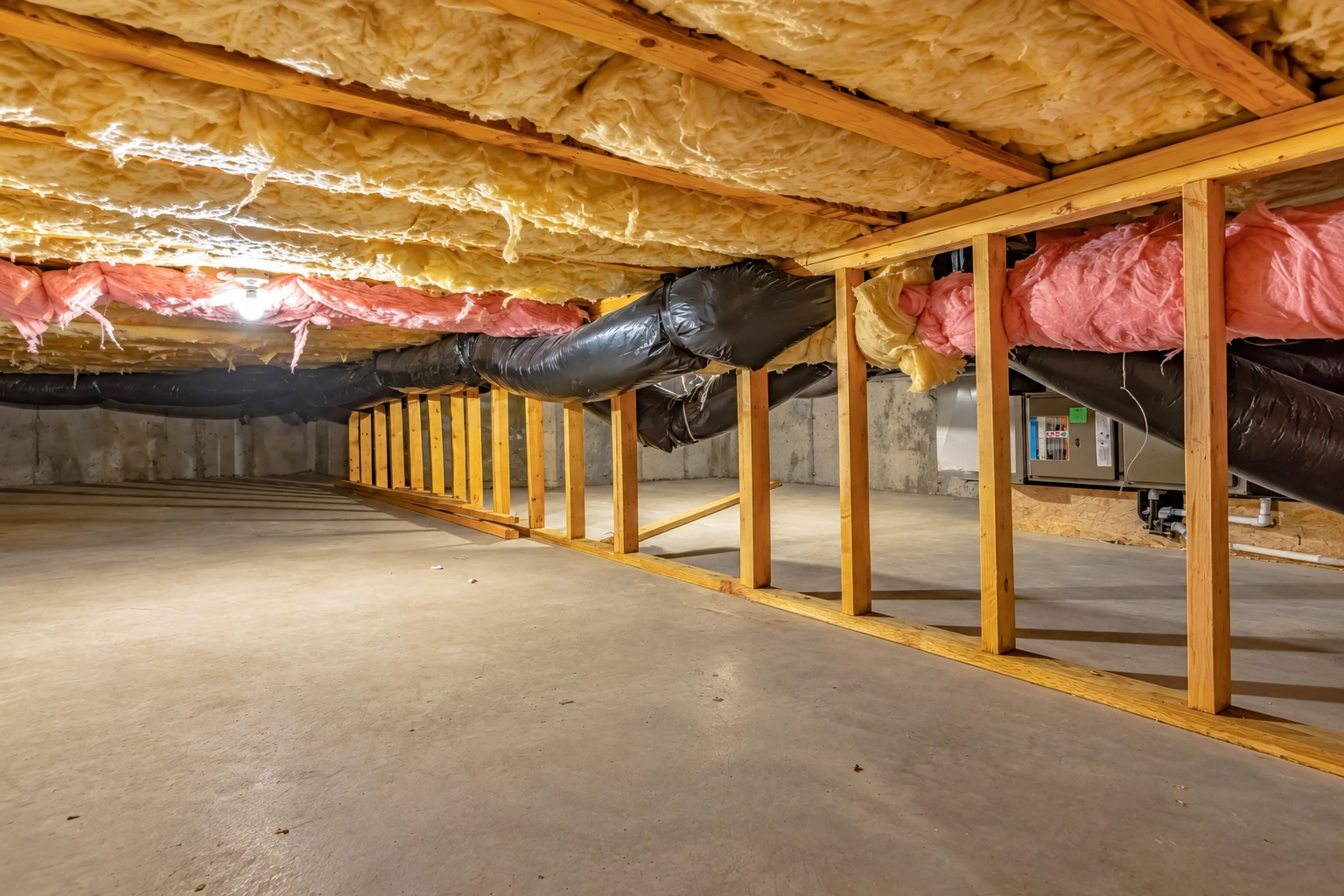
Cold floors in a raised-foundation house usually trace back to an open crawl space. We insulate between the floor joists and hold it firmly in place against the floor.
Older walls often have little or nothing inside them. We fill the cavities through small holes and patch them, so the rooms get warmer without tearing out plaster or drywall.
We find and close the gaps where air slips in and out of the house, which is often why a room still feels drafty after someone added insulation.
Where a house has a basement or a below-grade room, we insulate the walls and the rim joist so the space stays drier and the floor above stays warmer.
Closed-cell foam is the dense kind that also blocks moisture. We use it where damp is part of the problem, like rim joists, crawl space walls and some commercial roofs.
Open-cell foam is the softer, lighter kind. It seals air and quiets noise well, and it's a common pick under the roof deck when ductwork runs through the attic.
For shops, offices and rental units, we work the schedule out with you, and I write out the scope so property managers know exactly what they're approving.
We lay heavy plastic sheeting over the crawl space dirt and seal the seams, so ground moisture stays down there instead of rising into the floors and framing.
Where damp air could condense inside a wall, floor or ceiling, we put the right barrier on the right side, because a barrier in the wrong place traps water.
Before an attic gets more insulation, we seal the top plates, can lights, plumbing stacks and the hatch, so cool and warm air stay in the rooms below.
Insulating a finished house means working around what's already there. We top up attics, fill old walls and insulate under floors with as little disruption as we can manage.
Send the form and we'll get back to you within one business day to set a time. I come out, look over the attic and the rest of the house, and write your estimate myself, free and with no obligation.
I've run this business since 2013 and still come out to look at the job, so your estimate comes from someone who has crawled through a lot of attics.
The estimate lists what gets sealed, what comes out and what goes in, because I want you to know exactly what you're paying for before we start.
Once work starts, our crew lead runs the job and I check in on it, so someone who knows your estimate is watching how it goes in.
Here's what Whittier homeowners ask before we start, from permits and licenses to whether you need to leave the house.
Possibly, because the city requires a permit to alter, repair or improve a building, and its Building & Safety Division oversees those permits. Once one is issued, inspectors check that the work matches the approval. Before we start, we check which office covers your address and what it asks for, and if your job needs a permit, we handle the paperwork and line up inspections.
Usually, yes, two of them. The state requires a contractor license when a job needs a building permit, uses any extra workers, or totals $1,000 or more in labor and materials across the project. The city also requires a Whittier business license from anyone working here, even a company based outside the city, and verifies the state license number on it. We're licensed and fully insured.
Usually not for sealing gaps and blowing in loose fill, since that work stays in the attic and you can go about your day below. Spray foam is different. You, your kids and your pets stay out until the foam maker's re-entry time, the wait before it's safe to come back inside, is up. We tell you that time before we start so you can plan around it.
These are the other cities with their own page on our site. We take jobs in other cities around South Whittier too, so if yours isn't listed, call and ask.
I still answer the phone at (562) 358-3003, so the person you talk to is the one who comes out to look.